
What Should Commercial Cleaning Services Include?
Learn what a strong commercial cleaning scope should cover, where shortcuts tend to show up, and what to clarify before choosing a provider.
April 30, 2026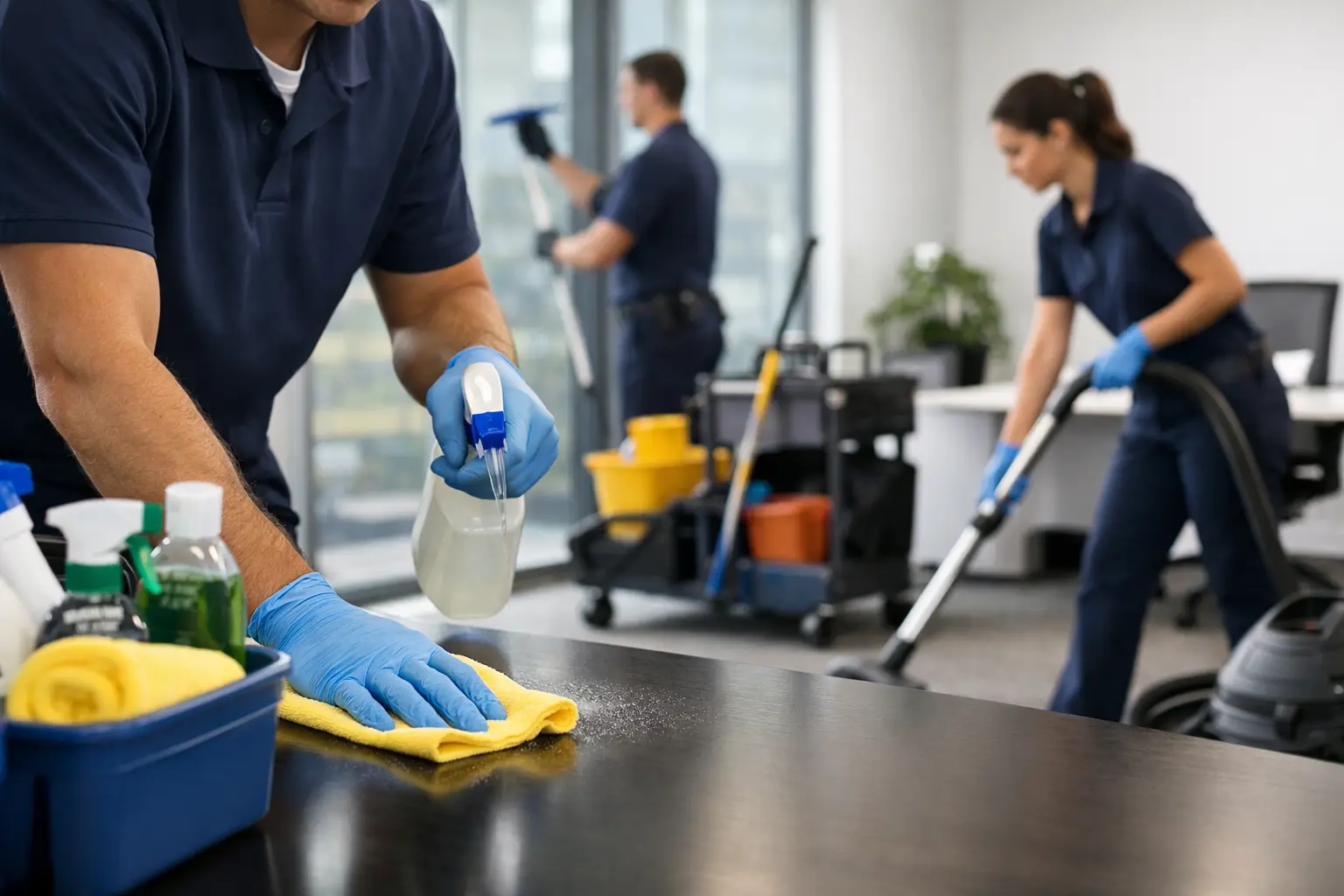
A smudged glass door, dusty baseboards, and floors that look dull by 10 a.m. tell people more about a business than most owners realize. Commercial cleaning services are not just about keeping a space usable. They shape first impressions, affect employee morale, and signal whether a business pays attention to details.
For offices, medical spaces, restaurants, and apartment common areas, the difference between basic upkeep and real cleaning shows up fast. A quick once-over may get the trash out and the counters wiped down, but it usually misses the buildup that makes a property feel worn, neglected, or harder to maintain over time. That is where standards matter.
What commercial cleaning services should actually cover
A good cleaning company should do more than hit the obvious surfaces. High-touch areas, edges, corners, floors, restrooms, entryways, and shared spaces all need consistent attention. If those areas are skipped or rushed, the whole building feels less clean, even when the main surfaces look fine at first glance.
In an office, that often means disinfecting door handles, light switches, phones, and break room surfaces while also staying on top of fingerprints on glass, dust on ledges, and dirt tracked in around entrances. In medical offices, expectations are higher because cleanliness is tied directly to patient confidence and daily operations. In restaurants, presentation and sanitation both matter, and cleaning needs to support the pace and pressure of service.
The right scope also depends on the building. A small office with low foot traffic may need a different schedule than a busy lobby, a multi-tenant property, or an apartment complex with shared hallways. That is why one-size-fits-all plans usually fall short. Good service starts by looking at how the space is actually used.
The difference between surface cleaning and deep cleaning
This is where many businesses get frustrated. They hire help, the space looks decent for a day, and then the same grime, marks, and dull floors keep coming back. Usually, the problem is not that the building is impossible to keep clean. It is that the work being done is too shallow.
Surface cleaning focuses on what is easy to reach and quick to finish. Deep cleaning is more methodical. It goes top to bottom, works past the obvious sightlines, and removes buildup instead of just pushing it around. That can mean hand-cleaning floors rather than relying on a fast mop pass, getting into corners that collect grime, and treating details like trim, fronts of fixtures, and low-traffic edges as part of the job rather than extras.
That approach takes more effort, but it also lasts longer. Floors hold their appearance better. Restrooms stay fresher. Shared spaces feel more cared for. For a business, that matters because clients, tenants, and employees notice the overall feel of a property long before they comment on any single cleaning task.
Why consistency matters as much as quality
A strong first visit is easy to sell. The real test is what happens after week three, month two, or a busy stretch where the building sees more traffic than usual. Commercial cleaning services need to be repeatable. If quality depends on who showed up that day or how rushed the schedule was, the results will drift.
Consistency comes from having a clear standard and following it every time. That means the cleaning crew understands what gets done, in what order, and to what level. It also means the business owner or property manager does not have to keep making the same requests over and over.
This is especially important in customer-facing businesses. If a waiting room, front desk area, or restroom is excellent one week and sloppy the next, people notice the gap. In workplaces, employees notice it too. A clean environment tends to feel calmer, more professional, and easier to work in. An inconsistent one creates low-level friction all day long.
What to look for when hiring commercial cleaning services
Price matters, but price alone usually does not tell you much. Two companies can quote the same square footage and offer very different results. The better question is how the work will be done.
Ask whether the company cleans in a detailed, top-to-bottom way or mostly handles basic maintenance. Ask how floors are cleaned, how restrooms are handled, and whether high-touch surfaces are part of the regular service. Ask how they deal with problem areas that keep coming back. A dependable company should be able to explain its process in plain language.
It also helps to ask about accountability. If something is missed, what happens next? A satisfaction guarantee is not just a nice extra. It shows the company stands behind the work and expects to be held to a standard. That matters for busy managers who do not have time to chase down basic follow-through.
Local experience can matter too, especially for businesses that want a service partner who understands older buildings, seasonal foot traffic, and the pace of different types of facilities in the Detroit Metro area. A neighborhood business with long roots often has a stronger sense of responsibility because its reputation is built one relationship at a time.
Different spaces need different cleaning priorities
Not every commercial building should be cleaned the same way. Offices tend to need steady upkeep in workstations, conference rooms, kitchens, and restrooms. Medical offices need careful attention to waiting areas, exam rooms, and touchpoints that affect patient trust. Restaurants deal with grease, spills, and heavy use that can make floors and surfaces break down quickly if cleaning is rushed.
Apartment complexes have another set of needs. Common areas, entryways, stairwells, and shared laundry spaces shape how residents feel about the property. They also influence leasing impressions for prospective tenants. In those settings, cleaning is part of property presentation as much as maintenance.
That is why a thoughtful service plan works better than a generic checklist. The best commercial cleaning services match the work to the building, the traffic level, and the expectations of the people using the space every day.
Shortcuts cost more than they save
Fast cleaning can look cheaper on paper. It often costs more later. Floors wear out faster when dirt and residue are left behind. Restrooms become harder to maintain when buildup is allowed to settle in. Entryways start to look tired, and that affects how the whole property is perceived.
There is also the cost of distraction. When staff members have to point out missed trash, streaked glass, or unkempt restrooms, they are spending time on problems they thought they had already solved by hiring a cleaning company. Property managers and business owners need a service they can trust without constant oversight.
That is one reason many local businesses prefer a company that treats cleaning like a craft rather than a speed run. A careful, hands-on standard may take more effort, but it protects the appearance of the space and reduces the cycle of repeated complaints.
When it is time to switch providers
If you are seeing the same missed details again and again, it may not be a communication problem. It may be a standards problem. Dirt along edges, restrooms that never feel fully clean, floors that still look grimy after service, and visible dust on fixtures or trim usually point to a process that is too rushed.
Another warning sign is when the work feels reactive instead of steady. If the building only looks right after you complain, the service is not dependable enough. Commercial cleaning services should give you confidence, not another task to manage.
For businesses that want a more thorough approach, Broom Hilda's Cleaning Services has built its name on detailed, repeatable cleaning and a 48-hour satisfaction guarantee. That kind of accountability matters when your facility reflects your business every single day.
Clean spaces support better work, better impressions, and better day-to-day operations. If your current service is only making things look passable, it may be time to expect a higher standard from the people trusted with your building.