
Deep Cleaning vs Standard Cleaning
Deep cleaning vs standard cleaning comes down to detail, buildup, and results. Learn what each includes and when your home or business needs more.
May 16, 2026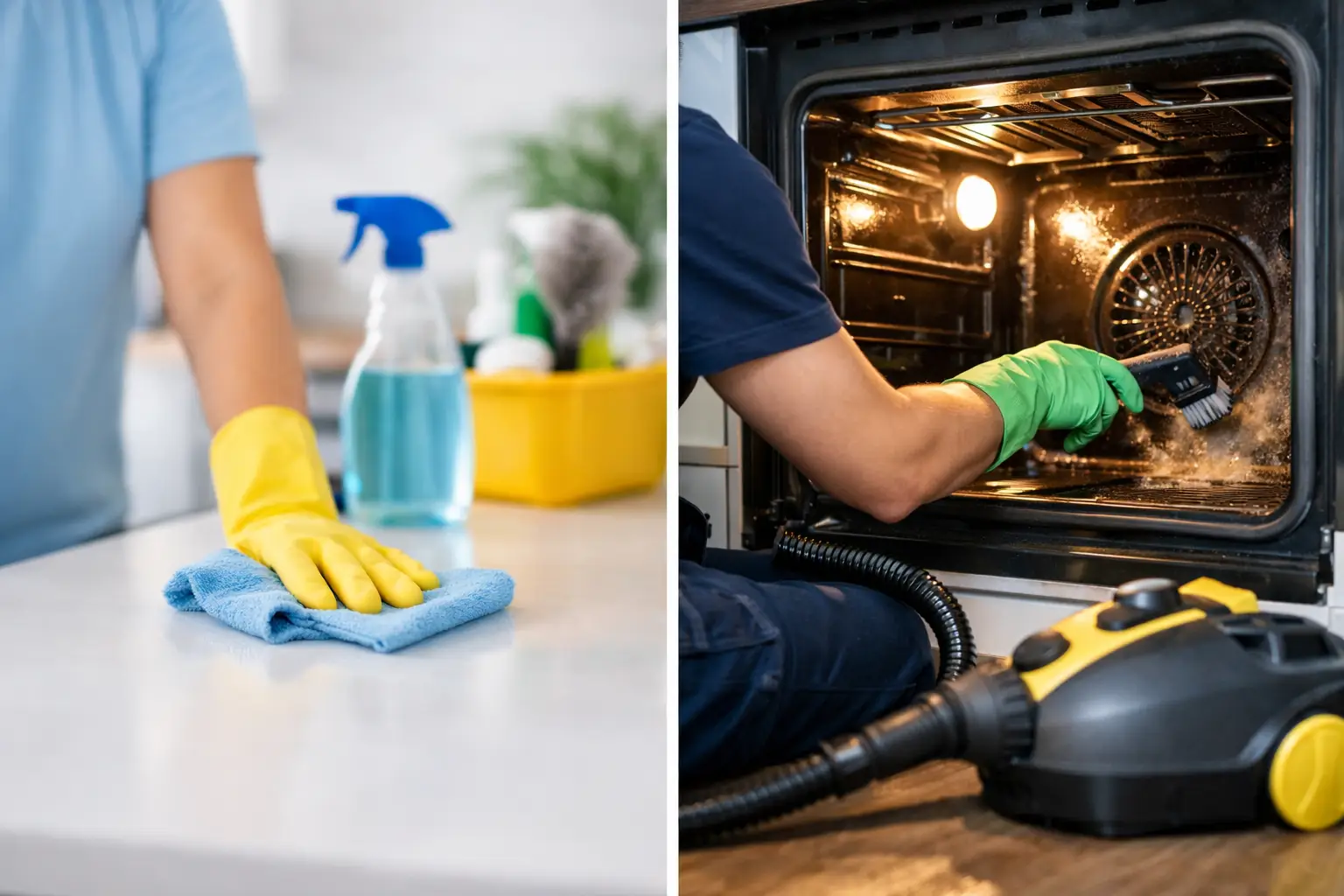
If your kitchen looks tidy but still feels grimy, or your office floors are being mopped but never quite look clean, you are already asking the right question: deep cleaning vs standard cleaning. On paper, both sound similar. In real life, they deliver very different results.
Standard cleaning is maintenance. It keeps a space presentable, manageable, and under control. Deep cleaning goes further. It targets buildup, neglected surfaces, edges, corners, and the kind of grime that does not come up with a fast pass and a mop. If you are deciding what your home or business actually needs, the difference matters.
What standard cleaning is meant to do
Standard cleaning is built for upkeep. It is the kind of service that helps a home stay comfortable week to week or keeps a business looking professional between heavier cleanings. The goal is not to reset every surface to its best possible condition. The goal is to maintain a clean baseline.
In most homes, that means wiping reachable surfaces, cleaning bathrooms and kitchens at a basic level, vacuuming carpets, dusting visible areas, taking out trash, and mopping floors. In commercial spaces, it usually means keeping lobbies, restrooms, break rooms, exam rooms, offices, or shared areas clean enough for daily use.
That is useful work. For many households and businesses, it is the right service most of the time. But standard cleaning has limits. It usually does not focus on detail work, heavy buildup, hand-scrubbing problem areas, or the top-to-bottom attention needed to correct long-standing dirt.
Deep cleaning vs standard cleaning: the real difference
The clearest way to understand deep cleaning vs standard cleaning is this: standard cleaning manages dirt, while deep cleaning removes what maintenance cleaning leaves behind.
Deep cleaning is more methodical. It takes longer because the work is more detailed. Instead of just wiping what is obvious, it addresses what has collected over time. That can mean scrubbing baseboards, corners, tile edges, shower buildup, grease around kitchen surfaces, dust on vents, fingerprints on doors and trim, and floors that need more than a quick once-over.
This is especially noticeable on hard floors. A standard service may include mopping, which helps with light soil and daily traffic. Deep cleaning often means hand-cleaning edges, treating stuck-on grime, and paying attention to the areas where dirt settles and stays. That is the difference between a floor that looks acceptable and a floor that actually feels clean underfoot.
For businesses, deep cleaning also affects presentation in a bigger way than many people expect. Customers notice glass smudges, restroom odor, floor dullness, and grime around entryways even if they cannot name each issue. Employees notice it too. A cleaner space supports morale, confidence, and a better first impression.
When standard cleaning is enough
Not every space needs a deep cleaning every visit. If your home is already in good shape and you keep up with chores, standard cleaning can be the smart choice. The same is true for offices and commercial spaces that receive frequent service and do not have heavy buildup.
Standard cleaning is often enough when you want to stay ahead of daily mess, reduce stress, and keep your environment consistently clean. It works well for recurring schedules because it prevents small issues from becoming bigger ones.
For example, a family home with regular weekly or biweekly service may only need occasional deeper attention. An office that is cleaned consistently after business hours may mainly need maintenance service, with deep cleaning reserved for high-touch areas, seasonal resets, or periods of heavy use.
The trade-off is simple. Standard cleaning saves time and supports consistency, but it will not fix years of accumulation or reach the same level of detail.
When deep cleaning is the better fit
Deep cleaning makes the most sense when a space has fallen behind, when you are starting new service, or when appearances and sanitation need to be stronger than basic upkeep can provide.
In homes, that often means moving into a new place, preparing for guests, getting ready for a new baby, catching up after a busy season, or resetting the home after illness, renovations, or long gaps between cleanings. Sometimes the issue is not obvious clutter. It is the film on surfaces, the dusty trim, the bathroom buildup, or floors that have been mopped often but never truly restored.
In commercial spaces, deep cleaning is often the right call before opening, after tenant turnover, during seasonal transitions, or when customer-facing areas need sharper presentation. Medical offices, restaurants, apartment common areas, and high-traffic workplaces especially benefit from more detailed cleaning because wear shows up faster there.
This is also where cleaning style matters. A service that treats deep cleaning as a real top-to-bottom process will produce a different result than one that simply adds a few extra tasks to a standard visit. That difference shows up in corners, floors, fixtures, and overall feel.
Why floors tell the whole story
If you want one easy way to judge deep cleaning vs standard cleaning, look at the floors.
A quick mop can freshen a room, but it can also spread dirty water around if the floor has real buildup. It does not automatically remove grime from edges, textured surfaces, or spots where foot traffic has pressed dirt in over time. Hand-scrubbed attention, spot treatment, and careful detail work are what bring hard floors back.
That is one reason homeowners and business operators often feel disappointed after a cleaning that looked fine at first glance. The room may smell clean and surfaces may shine, but the floor still tells the truth. When floors are truly clean, the whole space feels better.
Choosing the right service for your space
The best choice depends on condition, expectations, and how the space is used.
If your home or office is already maintained and you want help staying on track, standard cleaning may be all you need right now. If the space has built-up grime, neglected details, or a general feeling of being clean enough but not actually clean, deep cleaning is usually the better investment.
It also depends on your goal. If your goal is simple upkeep, standard service fits. If your goal is a reset, better presentation, healthier surroundings, or a stronger first impression, deeper work pays off.
For many customers, the best plan is not one or the other forever. It is starting with a deep cleaning, then moving into regular maintenance. That approach gives the space a true baseline and makes recurring service more effective. Instead of cleaning over old buildup, each visit helps preserve a cleaner standard.
What to ask before you book
Before scheduling service, ask how the company defines deep cleaning and standard cleaning. Those terms are not always used the same way.
You should know whether floors are simply mopped or carefully scrubbed as needed, whether detail work is included, how bathrooms and kitchens are handled, and what level of attention is given to trim, corners, and buildup-prone areas. It is also reasonable to ask what happens if you are not satisfied.
A dependable cleaning company will be clear about scope, honest about what your space needs, and willing to stand behind the work. That matters whether you manage a busy household or operate a customer-facing business where appearance reflects directly on you.
At Broom Hilda's Cleaning Services, that standard has always mattered. Thorough work, no shortcuts, and a service guarantee are not extras. They are part of how trust is built over time.
Deep cleaning vs standard cleaning for homes and businesses
For homeowners, the choice usually comes down to comfort, health, and peace of mind. A well-maintained home feels calmer and easier to live in. A deeply cleaned home feels reset. If your space has been weighing on you, deeper cleaning often delivers the biggest relief.
For businesses, the question is often about presentation and consistency. A standard cleaning may keep things acceptable day to day, but deep cleaning protects the details customers and staff notice most. If your space represents your brand, those details are not small.
There is no one-size-fits-all answer, and that is the honest truth. Some spaces need regular maintenance. Some need a real reset first. The key is choosing the level of cleaning that matches the condition of the space, not just the cheapest or fastest option.
A clean space should do more than look decent from across the room. It should feel cared for when you walk in, whether that is your home at the end of a long day or your business before the first customer arrives.