
Commercial vs Residential Cleaning: Key Differences
Commercial vs residential cleaning differs in scope, schedule, standards, and results. Learn how to choose thorough service for your Detroit Metro space.
July 13, 2026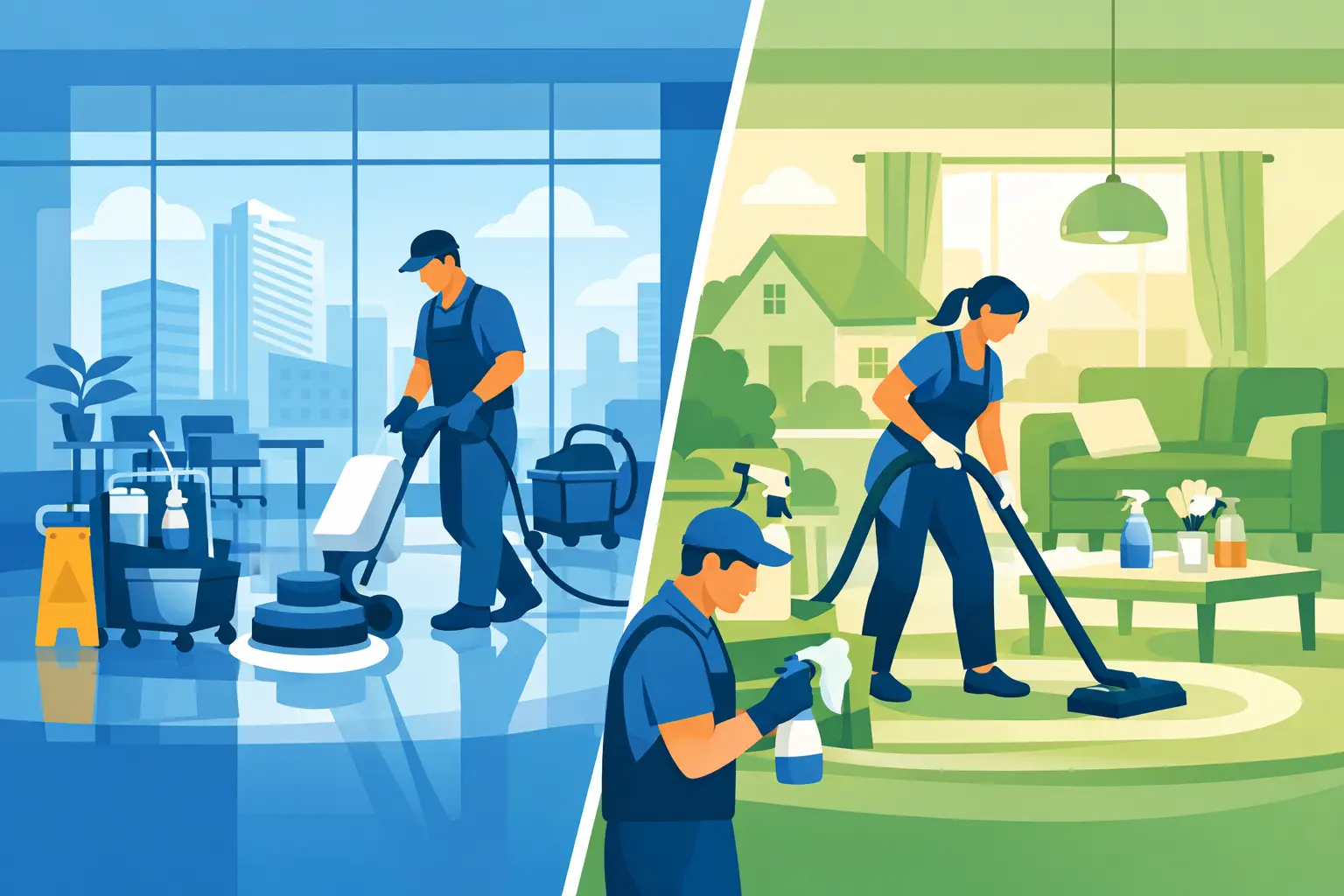
A clean office and a clean home may look similar at first glance, but the work behind them is not the same. Commercial vs residential cleaning comes down to more than square footage. It is about how people use the space, what they expect from it, and what a missed detail can cost.
For a homeowner, cleaning should make the house feel calmer, healthier, and easier to enjoy. For a business, it also has to support a professional image, daily operations, and the confidence of employees, customers, tenants, or patients. The right cleaning plan starts with understanding that difference.
Commercial vs Residential Cleaning: What Changes?
Residential cleaning is built around the routines of a household. Kitchens, bathrooms, bedrooms, living areas, and entryways need care based on how a family lives from day to day. The goal is personal comfort, a healthy environment, and the relief of walking into a home that feels truly cared for.
Commercial cleaning serves a broader group of people in a shared setting. An office manager may need clean workstations and restrooms before employees arrive. A retail manager may need attention to customer areas, high-touch surfaces, and floors that see constant traffic. A medical office has different expectations around cleanliness than an apartment complex lobby or a small retail store.
That is why commercial work is usually guided by a defined scope, a service schedule, building access procedures, and clear priorities for each area. Residential service can be just as detailed, but it is more personal. The cleaning team works around the household's needs, preferences, pets, and routines.
The level of traffic changes the job
A family kitchen gets used often, but a break room shared by 30 employees can collect spills, crumbs, fingerprints, and trash in a single day. Commercial floors also take more punishment from foot traffic, winter salt, rain, and debris tracked in from parking lots.
This affects both the frequency of cleaning and the method. A quick pass with a mop may make a floor appear better for an hour, but it does not always remove the buildup that makes floors look dull and feel grimy. Thorough service includes hand-scrubbed attention where it is needed, especially along edges, around fixtures, and in high-traffic paths.
At home, traffic patterns still matter. Mudrooms, bathrooms, kitchens, and pet areas often need more focused care than a guest room. A dependable cleaning service does not treat every room the same simply because it is on a checklist.
The schedule has a different purpose
Residential clients often schedule weekly, biweekly, monthly, or one-time deep cleaning around family life. Some need help getting ahead before guests visit. Others want a regular routine that keeps the house from becoming another job at the end of a long week.
Commercial schedules may happen after business hours, before opening, overnight, or during quieter parts of the day. Reliability is central because cleaning cannot interrupt a busy office, a restaurant service, or patient appointments. The work also needs to be repeatable. If the front entry looks polished on Monday but neglected by Friday, the business feels the difference.
Frequency alone is not the answer. A daily commercial service can still fall short if it only empties trash and wipes visible surfaces. In the same way, a monthly house cleaning may need a deeper first visit before maintenance cleaning can keep up. The right schedule depends on use, condition, and expectations.
What Each Type of Cleaning Usually Includes
Both residential and commercial cleaning can include dusting, vacuuming, restroom cleaning, floor care, trash removal, and disinfecting high-touch points. The difference is in the details that receive the most attention.
In a home, the cleaning plan may focus on kitchen grease, bathroom soap residue, baseboards, furniture surfaces, bedrooms, and the spots families notice every day. Homeowners often value the difference between a room that has been straightened up and one that has been cleaned top to bottom.
In a commercial setting, cleaning priorities often include entrances, reception areas, restrooms, break rooms, common areas, interior glass, touchpoints, and floors. Presentation carries real weight. A smudged front door, overflowing restroom trash, or sticky floor can shape a visitor's opinion before anyone says a word.
Some facilities need specialized attention. Medical offices may require carefully managed restroom and waiting-room cleaning. Apartment communities need common areas that make residents and prospective renters feel welcome. Restaurants need a cleaning routine that supports a clean guest experience without interfering with service. A good provider asks practical questions rather than offering one generic package for every building.
Deep cleaning versus surface maintenance
This is one of the most important distinctions for both homes and businesses. Maintenance cleaning helps keep a reasonably clean space in good shape. Deep cleaning deals with the buildup that regular, surface-level work leaves behind.
A deep clean may involve more detailed work around baseboards, doors, fixtures, corners, floor edges, and areas behind or beneath accessible furniture. It means looking beyond what is obvious from the doorway. For floors, it means addressing grime instead of simply spreading it around with a fast mop.
Not every appointment needs to be a full deep cleaning. That would not be practical for every budget or schedule. But a strong cleaning relationship usually begins with a realistic assessment of the space and includes periodic detailed work to prevent buildup from taking over.
How to Choose the Right Cleaning Service
The best choice is not always the company with the shortest quote or the broadest list of promises. Ask how the work is performed, how the team handles high-use areas, and what happens if something does not meet expectations. Clear answers say more than vague claims about being the best.
For residential cleaning, look for a provider that respects your home and understands what helps it feel restful. The service should be comfortable working around your routine while still following a consistent process. If you have pets, children, allergies, or rooms that need special attention, bring those needs up before scheduling.
For commercial cleaning, make sure the provider understands your facility type and can work within your hours and access requirements. Ask how quality is checked from visit to visit. A cleaning crew should know which areas create the biggest impression on your customers and which spaces affect your staff's ability to work comfortably.
It also helps to ask what is included in the standard service and what is considered additional work. Clear expectations prevent disappointment later. They also make it easier to build a schedule that fits your actual needs rather than paying for tasks you do not need or leaving out the work that matters most.
Accountability matters in either setting
Cleaning is a trust-based service. In a home, you are trusting a team with your personal space. In a business, you are trusting them with your workplace, your reputation, and often the first impression people have of your organization.
That trust should be backed by accountability. At Broom Hilda's Cleaning Services, we believe a cleaning job should be thorough enough to stand behind, which is why our work is supported by a 48-hour satisfaction guarantee. Since 1987, our local team has built relationships by doing the detailed work, not cutting corners when no one is looking.
A Better Standard Starts With the Right Fit
Residential and commercial cleaning share a purpose: creating spaces where people feel better. But the way that purpose is delivered should match the space itself. A home deserves care that supports peace of mind. A business deserves consistent service that protects its professional image.
Whether you manage a busy facility or want your home to feel like a place to recharge, start with the areas that affect people most. Then choose a cleaning partner willing to clean them thoroughly, check the details, and make things right when needed.