
Apartment Complex Cleaning Services: Common Areas, Turnovers & More
Explore cleaning for apartment communities, including common areas, high-traffic spaces, vacant units, turnovers, and repeat scheduling.
May 10, 2026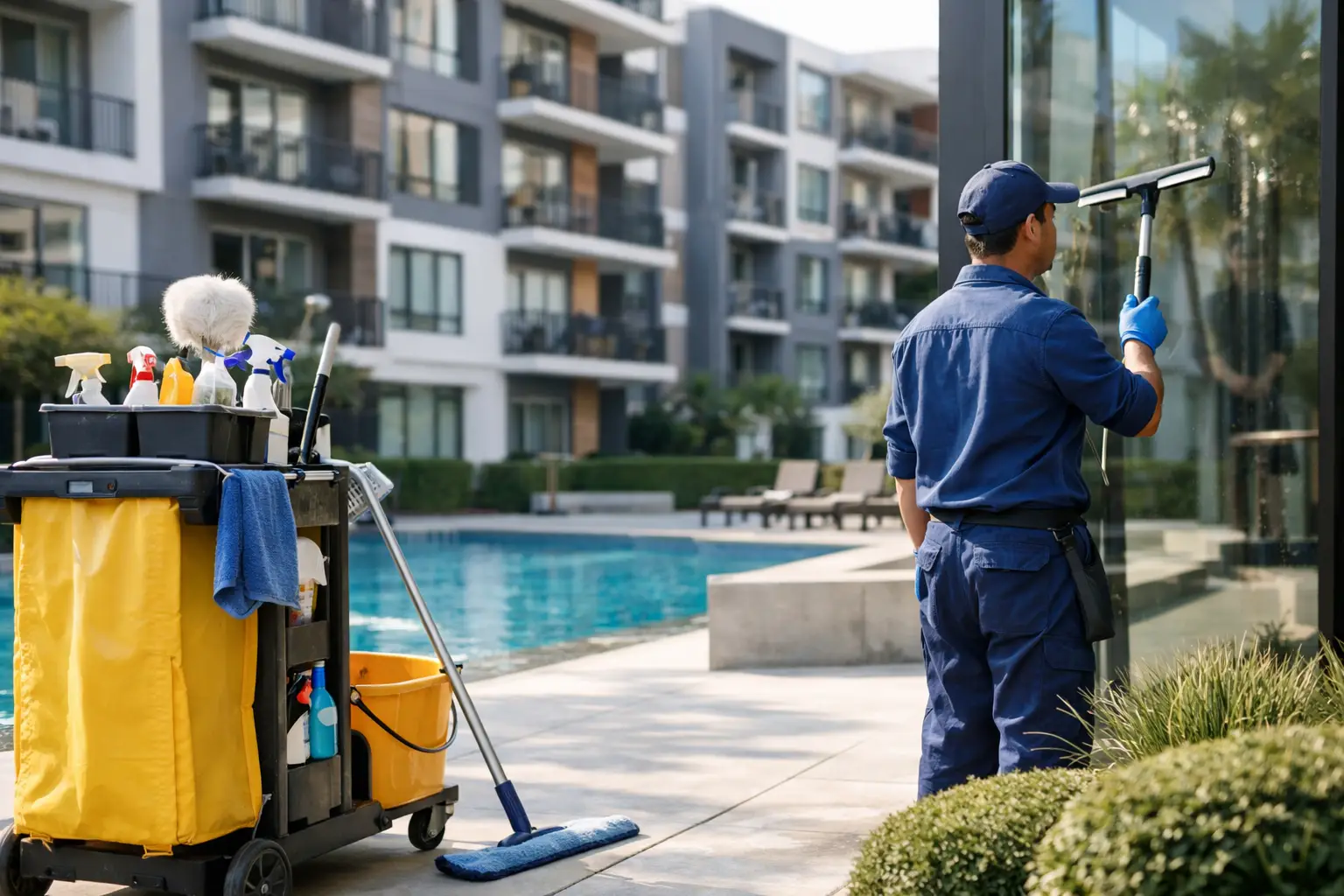
A clean lobby at 8 a.m. can look tired by noon if the work behind it is only surface-deep. That is why apartment complex cleaning services need to be built around traffic, wear, and repeatable standards - not quick pass-throughs that miss the details residents notice every day.
For property managers, leasing teams, and ownership groups, cleaning is tied to more than appearance. It affects resident satisfaction, online reviews, staff workload, and the overall feel of the community. When shared spaces are consistently clean, the building feels cared for. When they are not, people assume other standards are slipping too.
What apartment complex cleaning services should actually cover
In a multifamily property, cleaning rarely means one simple checklist. Common areas take one kind of attention, while high-touch surfaces, stairwells, elevators, restrooms, and amenity spaces each need their own routine. The right service plan reflects how the building is used, not just how it looks during a walkthrough.
Most apartment complex cleaning services should include lobbies, entryways, hallways, staircases, elevators, leasing offices, mailrooms, shared laundry areas, clubhouses, and fitness rooms when those spaces exist. Trash handling, dusting, glass cleaning, restroom care, and floor work all matter, but the quality of the work depends on how thoroughly each task is done.
That last part is where many service plans fall short. A floor may be mopped and still not be truly clean. Corners, edges, buildup near baseboards, and traffic lanes tell the real story. In apartment communities, especially older buildings or heavily used properties, hand-detailed work often makes the difference between a place that looks cleaned and one that actually feels clean.
Why surface cleaning creates bigger problems later
A property can get away with shortcuts for a little while. Then the signs start stacking up. Entry glass stays smudged. Stair landings collect grime. Hallway floors lose their color under a film of dirt. Odors settle into shared spaces. Staff members start fielding comments from residents that are really about consistency, not one isolated issue.
Surface-level cleaning usually costs less up front, but it can create more labor and more frustration over time. If a crew is moving too fast, they may hit the middle of the floor and miss the edges, wipe around fixtures instead of cleaning them fully, or leave behind buildup that becomes harder to remove later. That means the next visit has to work against yesterday's shortcuts.
For apartment managers, this turns into a familiar cycle: complaints rise, standards become harder to enforce, and cleaning starts to feel reactive instead of dependable. A more methodical approach breaks that cycle by focusing on the kind of work that holds up between visits.
The standard that matters most is consistency
A beautifully cleaned clubhouse before a resident event is helpful. A consistently clean hallway, elevator, and front entrance every week is what protects the property's reputation. In multifamily settings, consistency is often more valuable than occasional polish.
That requires a cleaning partner with clear routines and realistic scheduling. Some spaces need daily or several-times-per-week attention. Others do better with a weekly deep-cleaning rhythm supported by periodic detail work. It depends on occupancy, building layout, season, and resident behavior.
For example, a smaller building with limited amenities may only need focused recurring service in common areas and entry points. A larger property with elevators, a fitness room, shared restrooms, and a busy leasing office may need a more layered plan. Winter in Metro Detroit can also change everything. Salt, slush, and wet foot traffic make floors harder to maintain and entrances harder to keep presentable.
This is why one-size-fits-all pricing and generic checklists often disappoint. Good apartment complex cleaning services should match the building's actual needs, not force the property into a package that looks efficient on paper.
Where deep cleaning has the biggest payoff
Not every area needs the same level of detail every visit, but some tasks deserve more than a quick once-over. Floors are a major example. In shared spaces, they take the most visible wear and influence the entire impression of the property. If they are cleaned properly, the building feels brighter and more cared for. If they are not, even a nice property can feel neglected.
The same goes for stairwells, elevator interiors, and entryways. These are transition spaces residents use without thinking about them until they look dirty. Dust along stair edges, fingerprints around elevator buttons, grime near door thresholds, and buildup in corners all signal poor maintenance faster than many managers realize.
Restrooms and laundry rooms also deserve special attention because residents judge them by both appearance and smell. A room can be stocked and still feel unclean if fixtures, floors, and touchpoints are not being handled carefully. Leasing offices matter too. Prospects may spend only a short time there, but first impressions happen fast, and a clean office supports the professionalism of the whole team.
How to choose apartment complex cleaning services wisely
The best questions are not only about price. They are about method, accountability, and whether the company understands the realities of shared residential spaces. Property managers need to know what gets cleaned, how often, how thoroughly, and what happens if something is missed.
A dependable provider should be able to explain its process in plain language. That includes how it handles floors, touchpoints, restrooms, glass, and detail work. If the answers stay vague, that is usually a warning sign. Clear standards lead to clear results.
It also helps to ask how the company handles quality concerns. In multifamily properties, occasional issues happen. The key is whether the cleaner stands behind the work and responds quickly. A satisfaction guarantee is more than a sales line when it is actually honored. It gives managers confidence that problems will be corrected instead of ignored.
Local knowledge matters too. A company that regularly serves apartment communities in places like Ferndale, Hazel Park, Royal Oak, and surrounding areas understands regional traffic patterns, weather challenges, and the expectations of local residents. That familiarity can make service more practical and more reliable.
What a strong cleaning partnership looks like
The best cleaning relationships are not built on constant follow-up. They are built on trust, communication, and work that speaks for itself. A property manager should not have to chase down basic tasks or repeat the same standards week after week.
A strong cleaning partner notices wear patterns, adjusts to problem areas, and helps the property stay ahead of complaints. Maybe the front entrance needs more attention during rainy weeks. Maybe the mailroom gets dirtier after weekends. Maybe a stairwell needs extra detail because it is seeing more traffic than expected. Those observations matter because they help the service stay useful, not rigid.
That is also where craftsmanship shows up. Thorough top-to-bottom cleaning, careful floor work, and attention to the parts of the building people actually touch and see every day create a stronger result than fast cosmetic cleaning. At Broom Hilda's Cleaning Services, that standard is rooted in the simple idea that if a space is worth cleaning, it is worth cleaning well.
A cleaner property supports more than appearance
When common areas are clean, the benefits spread out. Residents feel more comfortable in shared spaces. Prospects get a better first impression. On-site staff spend less time reacting to avoidable complaints. Ownership sees a property that presents itself well day after day.
That does not mean every building needs the same schedule or the same level of service. Some need frequent touch-ups. Others need fewer visits with deeper attention each time. The right answer depends on the property, the traffic, and the standard you want residents to experience.
The important thing is not to settle for cleaning that only looks fine from a distance. In apartment communities, people notice the details. They notice floors that are really clean, entryways that stay presentable, and shared spaces that feel maintained with care. If your property is trying to create that kind of experience, the cleaning plan should be built to support it every single visit.
A well-kept apartment complex does not happen by accident. It comes from steady work, clear standards, and a team that treats your property like it reflects on them too.