
Apartment Building Common Area Cleaning for Winter: A Property Manager's Plan
A practical winter cleaning plan for Metro Detroit apartment lobbies, corridors, elevators, and shared spaces, with priorities for salt, moisture, scheduling, and resident communication.
November 11, 2026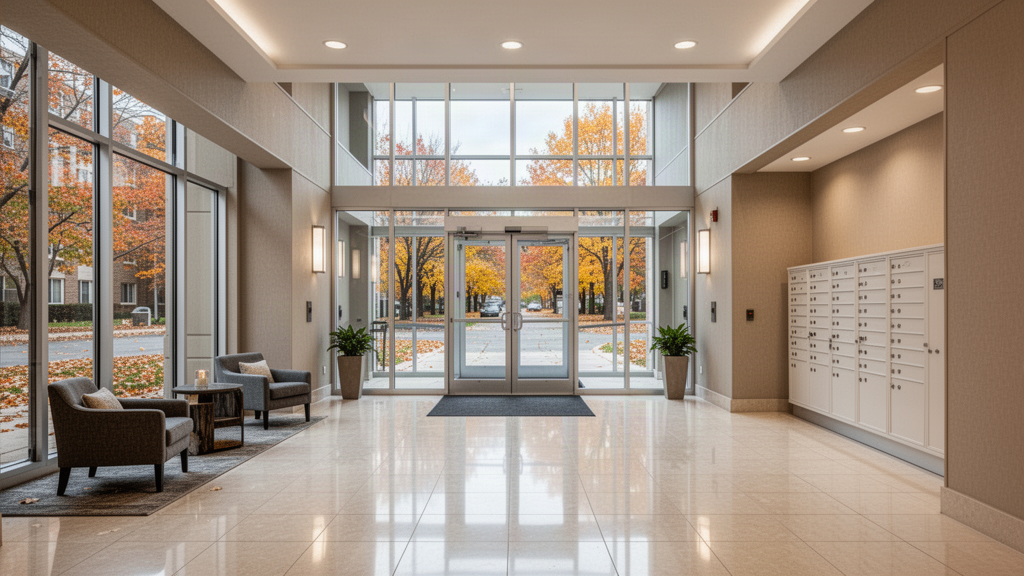
Winter changes the way apartment building common areas need to be maintained. Snow, slush, road salt, and wet footwear travel through entrances and into corridors. A lobby that looks clean in the morning can need attention again after the evening commute. For Metro Detroit property managers, the most effective approach is not simply adding more mopping. It is matching the cleaning schedule, products, and inspection process to how residents actually use the building.
This guide focuses on shared spaces in occupied apartment buildings. It complements, rather than duplicates, the cleaning required when individual units become vacant.
Start With a Winter Common Area Walkthrough
Before sustained snowfall, walk the building from each outside entrance through the farthest occupied hallway. Note where water accumulates, where residents pause to remove boots, and where deliveries bring in debris. Photograph recurring trouble spots so the cleaning team and property manager have the same reference.
Map High Traffic Routes
Pay special attention to entrances, vestibules, elevator thresholds, mail and package areas, stairwell landings, and routes from parking areas. A secondary garage entrance may need more frequent attention than the front lobby.
Separate Cleaning From Maintenance
Cleaning crews can remove tracked-in dirt and address routine surface care, but loose mats, water leaks, damaged floor finishes, and inadequate drainage require maintenance. Establish who receives reports and how urgent slip hazards are escalated.
Daily Winter Cleaning Priorities
Entrance Mats and Vestibules
Check that mats lie flat and do not obstruct accessible routes. Remove visible grit and moisture according to manufacturer instructions. Saturated mats may need replacement or drying, not another vacuum pass. Do not let puddles collect beyond the mat edge.
Lobby and Elevator Floors
Remove loose salt and grit before wet cleaning to avoid dragging abrasive particles across finishes. Use floor products compatible with the specific tile, stone, vinyl, or other surface. Follow label dilution instructions and use warning signs while floors are wet. Elevator tracks and thresholds deserve extra attention because debris collects in narrow edges.
High Touch Surfaces
Clean accessible door handles, push plates, elevator buttons, handrails, and shared counters according to traffic. If disinfection is part of the contract, use appropriate products according to their label directions and contact times. Cleaning and disinfecting are separate tasks.
Weekly Tasks That Prevent Buildup
Inspect floor edges, corners, baseboards, lower walls, and areas beneath movable lobby furniture. Salt residue often becomes more visible after several freeze and thaw cycles. Clean accessible interior glass near entrances, remove fingerprints from mailroom surfaces, and check trash and recycling stations for spills or odors.
Stairwells and Secondary Entrances
Stairwells may receive less daily attention even when frequently used by residents and delivery workers. Review landings, railings, doors, and corners. Side entrances and garage connectors should appear explicitly on the checklist.
Shared Amenities
Where a building has a fitness room, lounge, laundry room, or business center, document its specific cleaning tasks and hours of access. A laundry room may need attention to lint and detergent residue, while a lounge may need more frequent table and upholstery checks. Appliance interiors and specialty equipment cleaning should be defined in the service agreement.
Protect Floors From Road Salt and Grit
Winter residue is not just cosmetic. Abrasive particles can dull some finishes, and incorrect cleaners can damage sensitive surfaces. The correct method depends on the floor material and manufacturer guidance. Do not assume a strong cleaner is safe for every floor. Coordinate restoration work separately from routine cleaning.
When More Frequent Service Makes Sense
Buildings with high resident traffic, pets, multiple entrances, or heavy package delivery may benefit from midday or evening touch-ups. Track recurring moisture and salt buildup for two weeks, then adjust the frequency based on observations rather than guesses.
Build a Checklist That Can Be Audited
A useful checklist names the area, task, frequency, and responsible party. Record exceptions such as blocked access, equipment problems, or maintenance hazards. A short written log helps managers identify patterns without requiring residents to report every problem.
Coordinate With Residents and Vendors
Tell residents when floors are being serviced and where caution signs will appear. Coordinate with snow removal vendors so ice melt is applied appropriately outdoors and not unnecessarily tracked inside. Confirm who replaces mats and orders supplies before a storm arrives.
How Common Area Cleaning Differs From Apartment Turnovers
Occupied-building cleaning focuses on safe, presentable shared spaces throughout the day. A vacant-unit turnover has a different goal: preparing a specific apartment for the next resident. Keep scopes and schedules distinct. See our apartment turnover cleaning and property management cleaning service pages. For mixed-use buildings, our commercial cleaning services may also be relevant.
Planning for Metro Detroit Apartment Properties
Buildings in Royal Oak, Southfield, and Troy can have very different layouts and traffic patterns. A smaller walk-up may need careful attention to stair landings and one entry, while a larger complex may have several lobbies, elevators, and amenities. Ask providers to walk the property and build a scope around actual usage.
Questions to Ask Before Requesting a Quote
- How many buildings, entrances, and floors require service?
- Which common areas are included and excluded?
- What are the floor materials and care restrictions?
- Are daytime touch-ups needed during snow events?
- Who handles mats, supplies, trash removal, and hazard reporting?
- What hours can the cleaning team access each space?
Clear answers help avoid both unnecessary visits and underestimating the work needed during winter.
Request a Common Area Cleaning Quote
Broom Hilda's Cleaning Service has served Metro Detroit since 1987. If you manage an apartment building or residential complex, tell us about your shared spaces, cleaning challenges, and preferred schedule. We can discuss a practical scope for your property. Request a free cleaning quote or call 248-547-4525.